
夏雪宜
夏雪宜
Focus on US stocks and walk with great companies.
0Following
8.6Kfollowers
Feed
Feed


The end of an era signals the beginning of another.
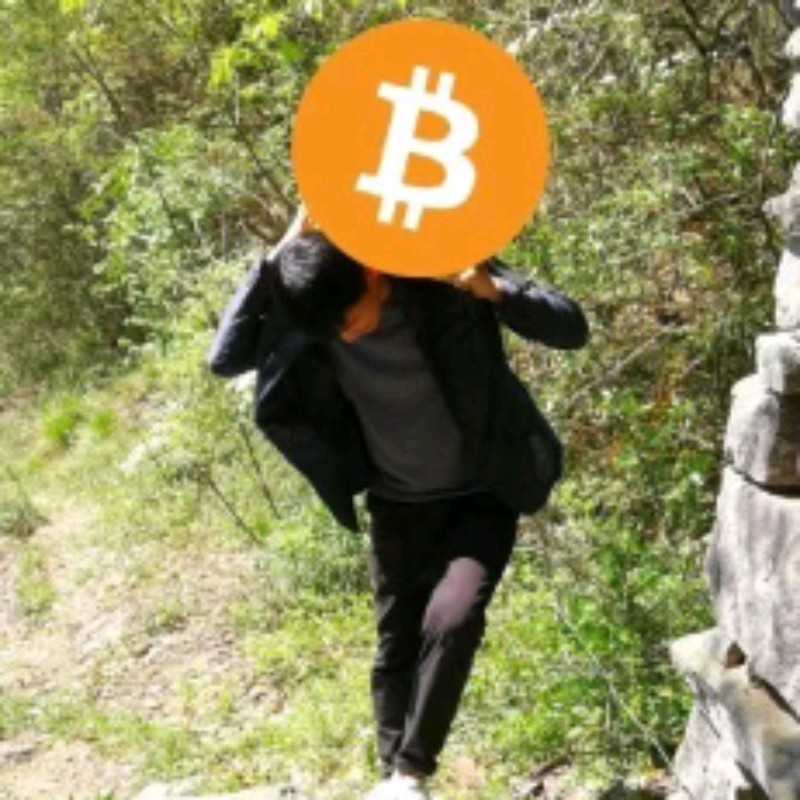
Starting today, the avatars and personal IP LOGO on all my social accounts will officially switch from Image 1 (carrying #Bitcoin on my shoulder) to Image 2 (carrying #Nasdaq on my shoulder).
I have used the Bitcoin-carrying avatar for a full ten years.
The original photo was taken when I was working at a mountain mining site, carrying a snake-skin bag with BTC mining machine parts from the mountain down to the mining site as a work check-in photo (sent to the boss). Later, a girl from Zhejiang University in the Aisi community photoshopped the Bitcoin logo onto it, making it my personal symbol, accompanying me through several cycles of crypto bull and bear markets.
Changing my avatar does not mean I am bearish on Bitcoin; on the contrary, I will continue to hold Bitcoin long-term. But my focus of exploration, wealth allocation, and main attention have fully shifted to the US stock market.
In fact, I have completed most of my wealth transfer: except for Bitcoin, all other crypto assets have been liquidated, and my total crypto assets now do not exceed 200,000 RMB.
The end of an era heralds the arrival of another. I hope this #newavatar will be as magnificent and extraordinary as the last decade, accompanying me through the next ten, twenty, fifty, or even one hundred years.
Within ten years, humanity is expected to conquer most diseases and live to 150; a hundred years from now, I will just be reaching the starting point of the "average lifespan." And my wealth is sufficient to support the best medical care and lifestyle arrangements.
Moving forward, no looking back.


This is not AI, but a real century-old ancient building in Zhejiang.
I admire the aesthetics of the ancients, and I also want to thank the local government for maintaining the ancient building so well, allowing it to still retain that rustic, original beauty.
I plan to go to Sanqing Mountain, and passing through Quzhou, I thought of visiting this niche attraction. Fortunately, when I arrived, there were people visiting, so I went in. The building's interior was already empty, and the attraction is very small, so the visit inside took less than 30 minutes. By the way, it is also very close to Jianglang Mountain!
"Quzhou Guangdu Dagong Hall" is hidden in the countryside, with blue bricks and black tiles bearing the marks of time, embraced by green mountains and fields. Walking along the ridges of the fields, I realized it looks like a solitary elder isolated from the world. The eaves of the roof curve upward, wooden components emit a warm luster, and every grain hides a story. Sunlight filters through the leaves and falls on the red walls; in the interplay of light and shadow, one can faintly see the bustling scenes of the past.
Suddenly, I understood why I made a special trip here after staying in the city for a long time—only this uncarved tranquility could strike me. There are no crowded crowds, only the distant crowing of roosters and the rustling of wind through the rice fields; even time seems to slow down.
Dagong Hall.
Built: 46th year of Qianlong in Qing Dynasty (1781)
Also known as: Shuixing Pavilion, Wenchang Pavilion (serving feng shui and literary fortune functions)
Grade: Zhejiang Provincial Cultural Relic Protection Unit
Location: Isolated in the middle of rice fields, surrounded by fields, with extremely poetic scenery.
Local legend: Built to stabilize feng shui, lock water outlets, and prevent the outflow of wealth and talent.
Function: Wenchang Pavilion, for scholars to study and pray for success in imperial exams; also as Shuixing Pavilion to control floods.
Folk legend: After completion, Guangdu Village experienced a flourishing literary fortune with "four generations achieving top ranks" and "six sons becoming scholars."
Admission: Free
Not regularly open; need to find villagers/administrators to open the door.


The booming development of artificial intelligence not only generates data but also produces mountains of discarded GPUs.
By 2030: 75 million tons of electronic waste will be generated annually. Gold, silver, and copper worth $60 billion will be buried in old servers.
Who are the winners? Of course, the companies responsible for clearing out these discarded GPUs.
$WM $IRM $CLH—The low-key billionaires of the AI era.🗑️💰
Bought the biggest popular sub-coin among the 48 BSC popular theme coins #WorldCup, the champion sub-coin 🏆 #FranceTeam
Currently have:
France Team Ca:
0x9da419a8aa39ac9ab04e5e91b4a6bdbae6fc7777
Argentina Ca: 0x331e30dabac371e84640890168e127c2aad57777
(Main coin) World Cup Ca: 0x091652ebc0a0238d7151a868f22d7cfd2a267777
The parent coin's tax empowers the champion sub-coin
48 sub-coins buy back and burn the parent coin
This model has been recognized by Principal Butterfly
Pretty good!
I bought them all!
Hu Zongxian, a controversial anti-Wokou hero, was a highly debated anti-Wokou commander during the Jiajing period of the Ming Dynasty, with historical evaluations being "mixed."

Outstanding achievements: The core strategist against the Wokou in the southeast, he promoted Qi Jiguang and Yu Dayou, supported the establishment of the "Qi Family Army," used counterintelligence to eliminate the Wang Zhi and Xu Hai factions, oversaw the compilation of the "Maritime Defense Atlas" to build a systematic coastal defense (first marking the Diaoyu Islands), and basically quelled the Wokou troubles in Zhejiang and Fujian. He was praised as "the force behind hundreds of years of Wokou-free southeast."

Fatal controversies: He rose to power by relying on Zhao Wenhua, the adopted son of Yan Song, bribed Yan Shifan, was seen as part of the Yan faction, tacitly allowed the exclusion of political opponents, lived extravagantly, and after the Yan faction fell, he was imprisoned and committed suicide for "forging imperial edicts."
Later rehabilitation: During the Wanli era, he was posthumously honored with the title "Xiangmao." Modern views often regard him as a pragmatic figure "growing lotus flowers in the mud"—enduring disgrace to resist the Wokou, not purely a villain, with his tragedy rooted in the political struggles of the Jiajing era.
He was a complex figure torn between ability and morality: his anti-Wokou achievements are immortal, but his political stains are hard to erase, embodying the "burden-bearer" caught in the cracks of his era.